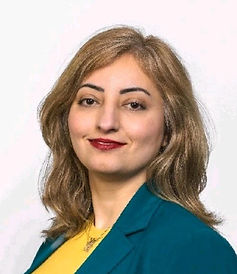
Tasneem Sanjana
DC28: Human and AI Agency Collaboration in Designing Transformative Innovations for Healthcare
Tasneem is a doctoral researcher and MSCA Fellow in DREAM+PLAN, Employed at Kaunas University of Technology, Kaunas, Lithuania & Co-enrolled at RMIT University in a Double Degree Position.
Tasneem's Story
Tasneem Sanjana is a technology and business professional originally from Bangladesh, currently specializing in innovative digital transformation. She holds an MSc in Information Systems from University College Cork (UCC) and a BSc in Electrical and Electronic Engineering from AIUB, earning First Class Honours for both.
Driven by a passion for integrating emerging technologies with business strategy, Tasneem’s early research focused on how Artificial Intelligence (AI) and Augmented Reality (AR) optimize operational performance. A standout achievement includes a collaborative project with Novartis during her MSc, where she developed a four-step strategic framework to embed AI and AR within pharmaceutical supply chains. Her work not only identified technological opportunities but also mapped out key barriers to digital adoption, earning her a distinction for innovation and academic performance. Her ability to merge theoretical innovation with practical solutions is further evidenced by her peer-reviewed publications in IEEE conferences and international journals regarding intelligent safety and renewable energy. Professionally, Tasneem also worked at the intersection of technology, data, and business operations.
Currently, Tasneem is a doctoral candidate and employed as a junior project researcher at Kaunas University of Technology (KTU) in Lithuania, co-enrolled at RMIT University in Australia. She is funded by the Horizon Europe MSCA project "European Doctoral Network for Neural Prostheses and Brain Research (DONUT)."
Tasneem's PhD research focuses on how artificial intelligence (AI) can enhance human intelligence and improve healthcare delivery. The broader impact of her research includes developing ethical guidelines, policy recommendations, and collaborative models to facilitate the responsible adoption of AI in healthcare, where healthcare is socially responsible and democratically governed, focusing on safety, equity, and human agency. Additionally, her goal is to create systems that enhance and support human creativity rather than replace it. She aims for healthcare to become more predictive, interconnected, and compassionate, ultimately driving positive change.